
Is It Plantar Fasciitis or Something Else?
Heel pain is one of the most common reasons people come to see a podiatrist, and plantar fasciitis is by far the most frequent cause. But it isn't the only one. Several other conditions can produce very similar symptoms, and treating the wrong one rarely helps; sometimes it can even make things worse. Understanding the differences can help you recognise what you might be dealing with, and why an accurate diagnosis matters before starting treatment.

What Is Plantar Fasciitis?
Plantar fasciitis is irritation or degeneration of the plantar fascia, the thick band of tissue running along the bottom of the foot from the heel to the toes. It's typically caused by repetitive strain, often linked to overuse, unsupportive footwear, a sudden increase in activity, or biomechanical factors like foot posture and arch type.
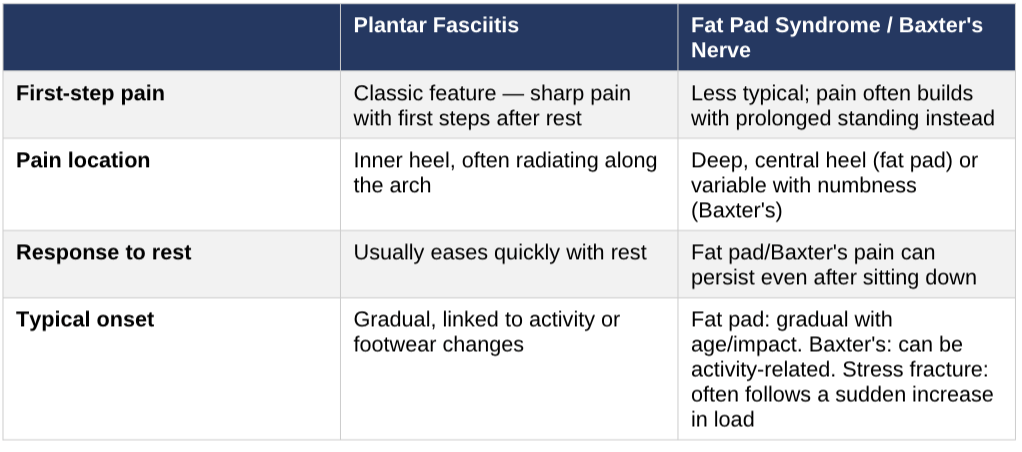
The classic presentation: pain is usually worst with the first steps in the morning or after rest, eases somewhat with movement, but can return after standing or activity for extended periods.
Three Conditions Often Mistaken for Plantar Fasciitis
1. Heel Fat Pad Syndrome
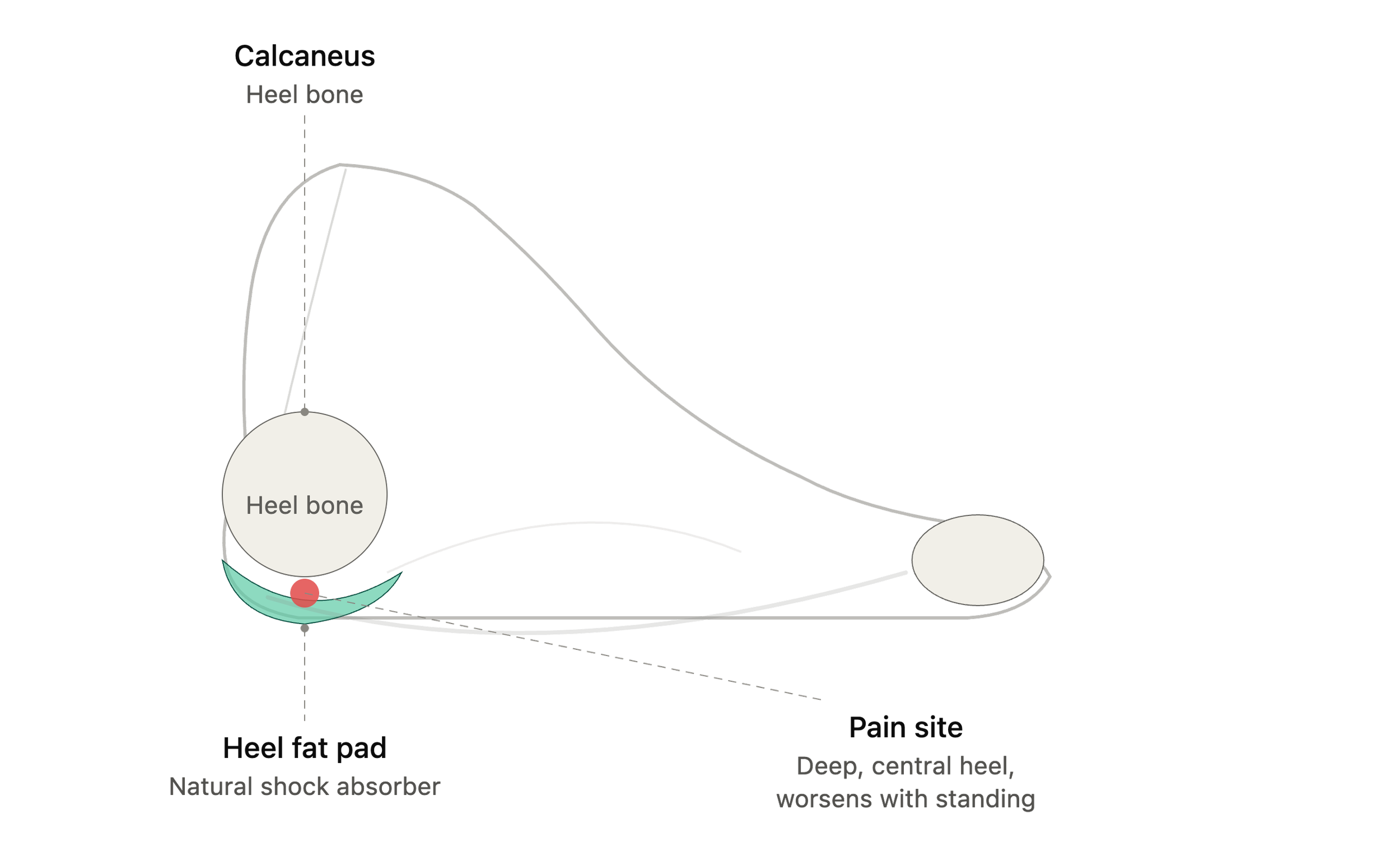
The heel fat pad is a natural shock-absorbing cushion under the heel bone. When it thins or degenerates, whether from age, repeated impact, or other factors, the heel loses some of its natural cushioning, which can cause pain in a very similar location to plantar fasciitis.
The key difference: fat pad pain tends to worsen the longer you're on your feet and is often felt as a deep, bruise-like ache directly under the heel bone, rather than the sharp first-step pain typical of plantar fasciitis. It's considered the second most common cause of plantar heel pain after plantar fasciitis.
2. Baxter's Nerve Entrapment
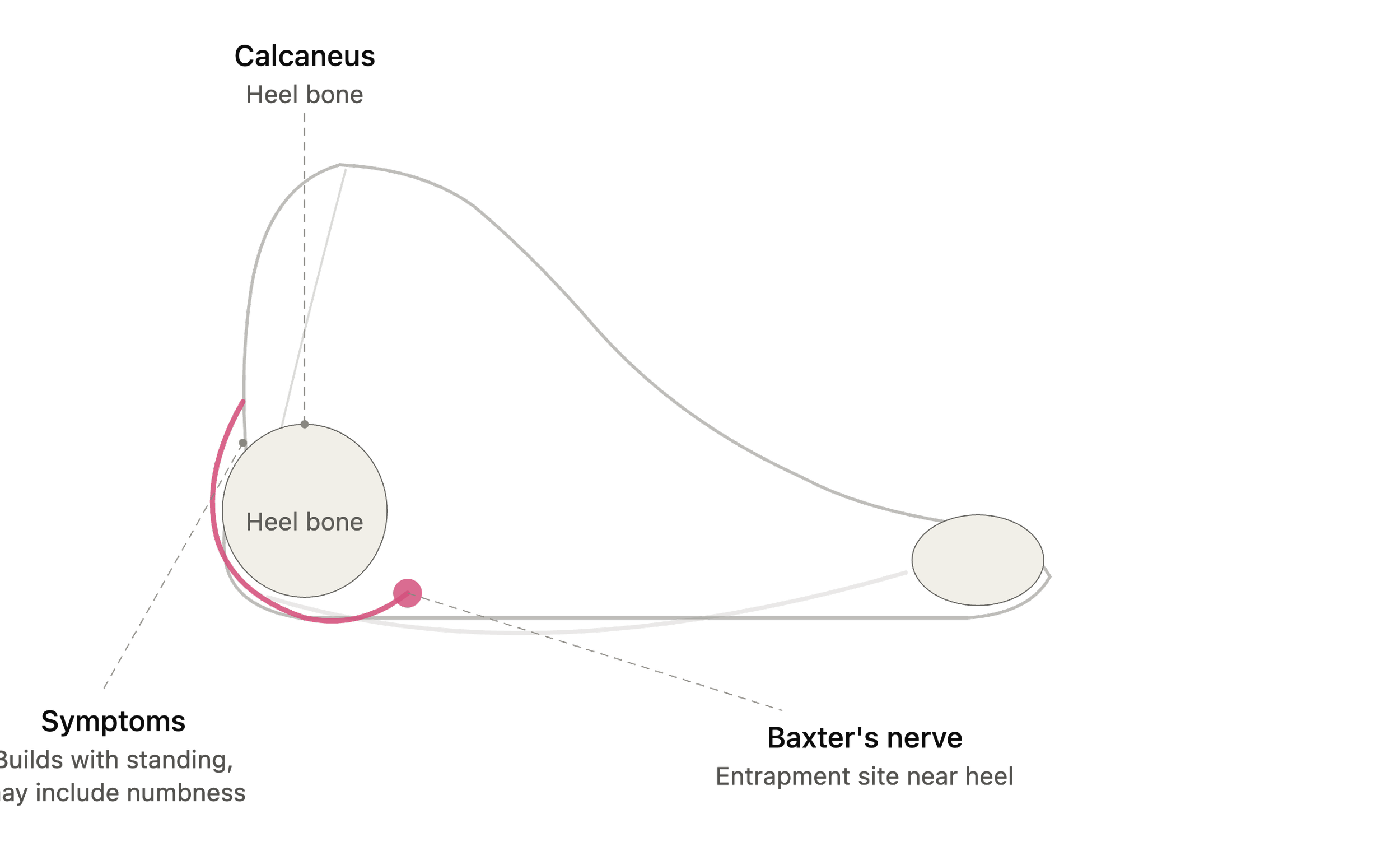
Baxter's nerve is a small nerve branch that can become compressed or irritated near the heel, causing pain that can closely mimic plantar fasciitis, particularly in younger, active patients.
The key difference: unlike plantar fasciitis, Baxter's nerve entrapment typically doesn't cause pain with the very first steps after rest. Instead, pain tends to build the longer you've been standing or walking, and discomfort can persist even after you've sat down and taken weight off the foot. Numbness in the heel is sometimes also present, which isn't a feature of plantar fasciitis.
3. Calcaneal Stress Fracture
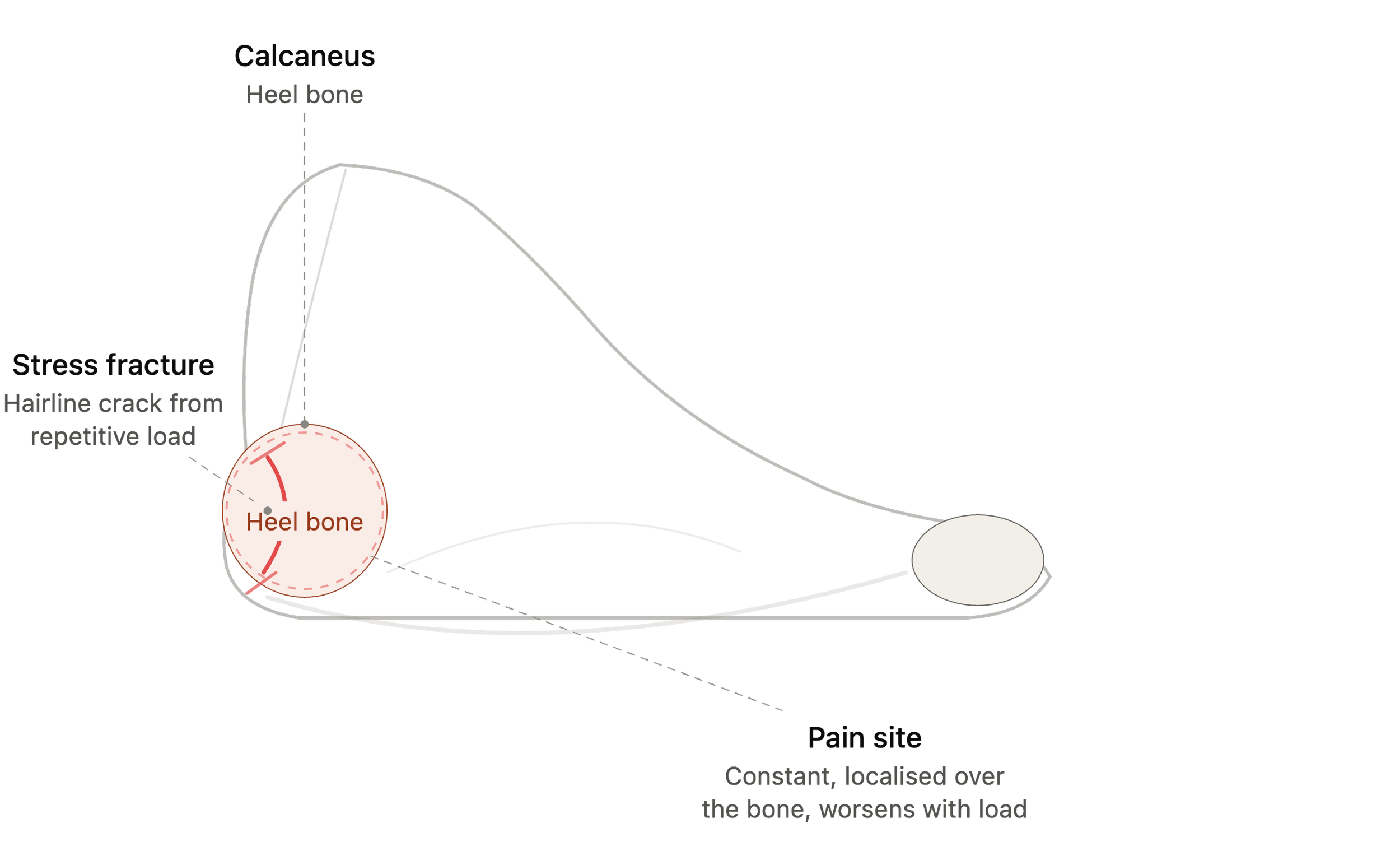
A stress fracture of the heel bone (calcaneus) can also present as heel pain, particularly in runners or people who've recently and significantly increased their activity levels.
The key difference: stress fracture pain is usually more constant and doesn't ease with movement the way plantar fasciitis often does first thing in the morning. There's typically localised tenderness directly over the bone itself, and pain tends to increase steadily with continued weight-bearing activity rather than warming up and improving.
At a Glance: Comparing the Patterns
Why Accurate Diagnosis Matters
These conditions can look very similar on the surface, but they don't respond to the same treatment. A program built around stretching and loading the plantar fascia, helpful for true plantar fasciitis, may do little for fat pad syndrome or nerve entrapment, and won't address a stress fracture at all. Getting the diagnosis right from the start means a treatment plan that's actually working with the underlying problem, rather than against it.
If you're dealing with heel pain that isn't responding the way you'd expect, or doesn't quite fit the typical plantar fasciitis pattern, it's worth having it properly assessed rather than assuming. Our podiatrists can examine your gait, pinpoint exactly where and how your pain presents, and confirm what you're actually dealing with before recommending a treatment plan tailored to it.

Not sure if it's plantar fasciitis or something else? Book an assessment with JS Podiatry in East Perth and get a clear diagnosis and tailored treatment plan.