
Tendon Pain and Exercise: Avoiding the Boom–Bust Cycle

Tendon Pain and Exercise: Avoiding the Boom–Bust Cycle
In our previous blog post, we discussed how a sudden increase in activity can lead to overuse injuries such as shin splints, plantar fasciopathy, achilles tendinopathy and stress fractures. One of the most common injuries to athlete these are tendinopathies.
Tendon pain can be frustrating, particularly for people who are motivated to stay active. Understanding how tendon injuries behave — and why they sometimes keep returning — can help guide the best approach to recovery.
What is tendinopathy?
Tendons are strong connective tissues that attach muscles to bones and help transmit force when we move. Activities such as walking, running, and jumping all rely on tendons to transfer the power generated by our muscles.
When a tendon is exposed to more load than it can tolerate over time, it can become painful and less able to function effectively. This condition is known as tendinopathy.
Normally, tendons constantly repair and remodel themselves to stay strong. However, repeated strain can disrupt this balance. The tendon begins producing different structural proteins, including increased amounts of type III collagen, which can change the organisation of the tissue.
At the same time, enzymes responsible for breaking down and rebuilding tendon tissue become more active. Together, these changes can make the tendon less organised and less able to tolerate stress, which may contribute to ongoing pain and stiffness.
Understanding the “boom–bust” cycle
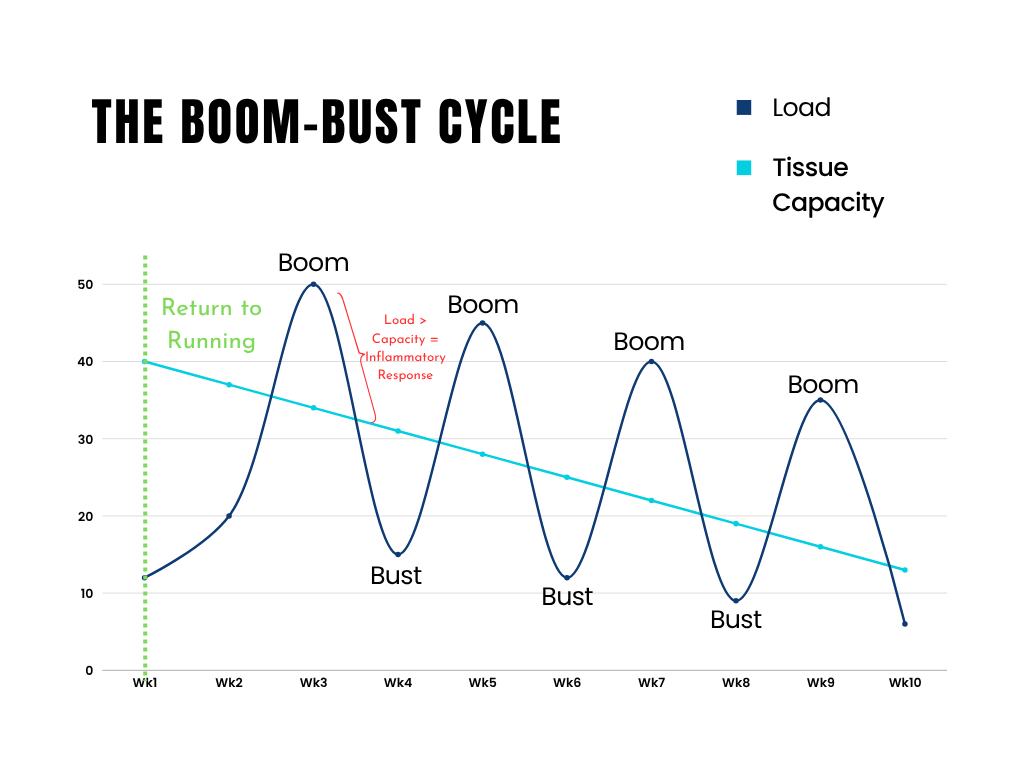
Image 1. Graph outlining the steady decline of tissue capacity as a tendon goes through multiple boom-bust cycles
One of the most common patterns seen with tendon injuries is something known as the boom–bust cycle. This cycle often begins when pain develops and the person responds by resting until their symptoms settle. Once the pain improves, they return straight back to their previous level of activity. Because the tendon hasn’t yet rebuilt its tolerance to load, the symptoms quickly flare up again. This can lead to another period of rest, followed by another attempt to return to activity — and the cycle repeats. Over time, these repeated flare-ups can make the tendon increasingly sensitive, meaning symptoms may return more quickly or more severely than before. This pattern can be frustrating for people trying to stay active, and it is one of the main reasons tendon injuries sometimes linger for months.
Finding the “Goldilocks zone”
Breaking the boom–bust cycle requires a more gradual and structured approach to returning to activity. Clinicians often describe the goal as finding the “Goldilocks zone” of tendon loading — not too much and not too little. If the tendon is overloaded, symptoms may worsen. But if it is not exposed to enough load, it may not regain the strength needed to cope with normal activity. Instead, the aim is to apply just the right amount of load to help the tendon adapt and become more resilient over time. This usually involves a gradual progression of exercises and activity levels as the tendon improves.

When to seek professional advice
Tendon pain can sometimes settle with simple activity modification, but if symptoms persist or repeatedly flare up, professional guidance can be helpful. A podiatrist can assess how your feet and lower limbs are functioning during movement and identify factors that may be contributing to tendon overload. From there, a plan can be developed to help gradually rebuild the tendon’s tolerance to load. Treatment may include targeted strengthening programs, footwear advice, orthotic therapy, dry needling or shockwave therapy, or load management strategies, depending on the individual condition.
With the right balance of activity and recovery, most tendon injuries can improve over time - helping you return to the activities you enjoy while avoiding the boom–bust cycle.
