
Shockwave Therapy for Achilles Tendinopathy and Plantar Fasciitis What to Expect
Nagging morning heel pain. An ache at the back of the ankle that flares up after running. Achilles tendinopathy and plantar fasciitis are two of the most common reasons people come to see us.
When rest, stretching, and footwear changes haven't been enough, shockwave therapy is often the next option we discuss. Here's what it is and what a typical course looks like.
Quick Summary
Shockwave therapy is a non-invasive treatment that uses sound waves to help stimulate tissue healing.
It's usually considered after simpler measures, such as rest, stretching, and footwear, haven't provided enough relief.
It's usually combined with load management, exercises, and sometimes orthotics, not used alone.
Sessions cause pressure or mild discomfort, not sharp pain, and there's no downtime.
A course is typically several weekly sessions, with your podiatrist monitoring progress.
What is Shockwave Therapy?
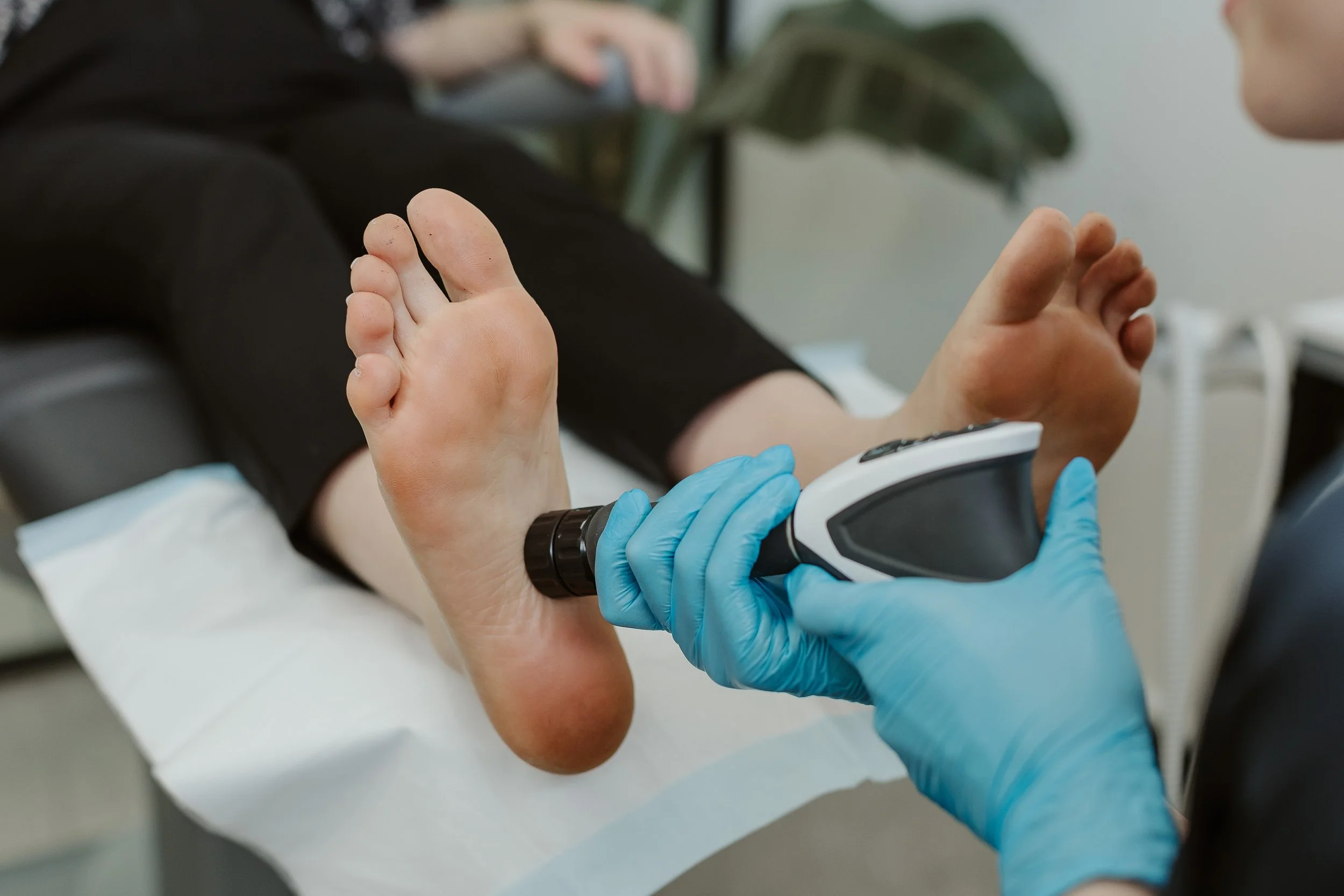
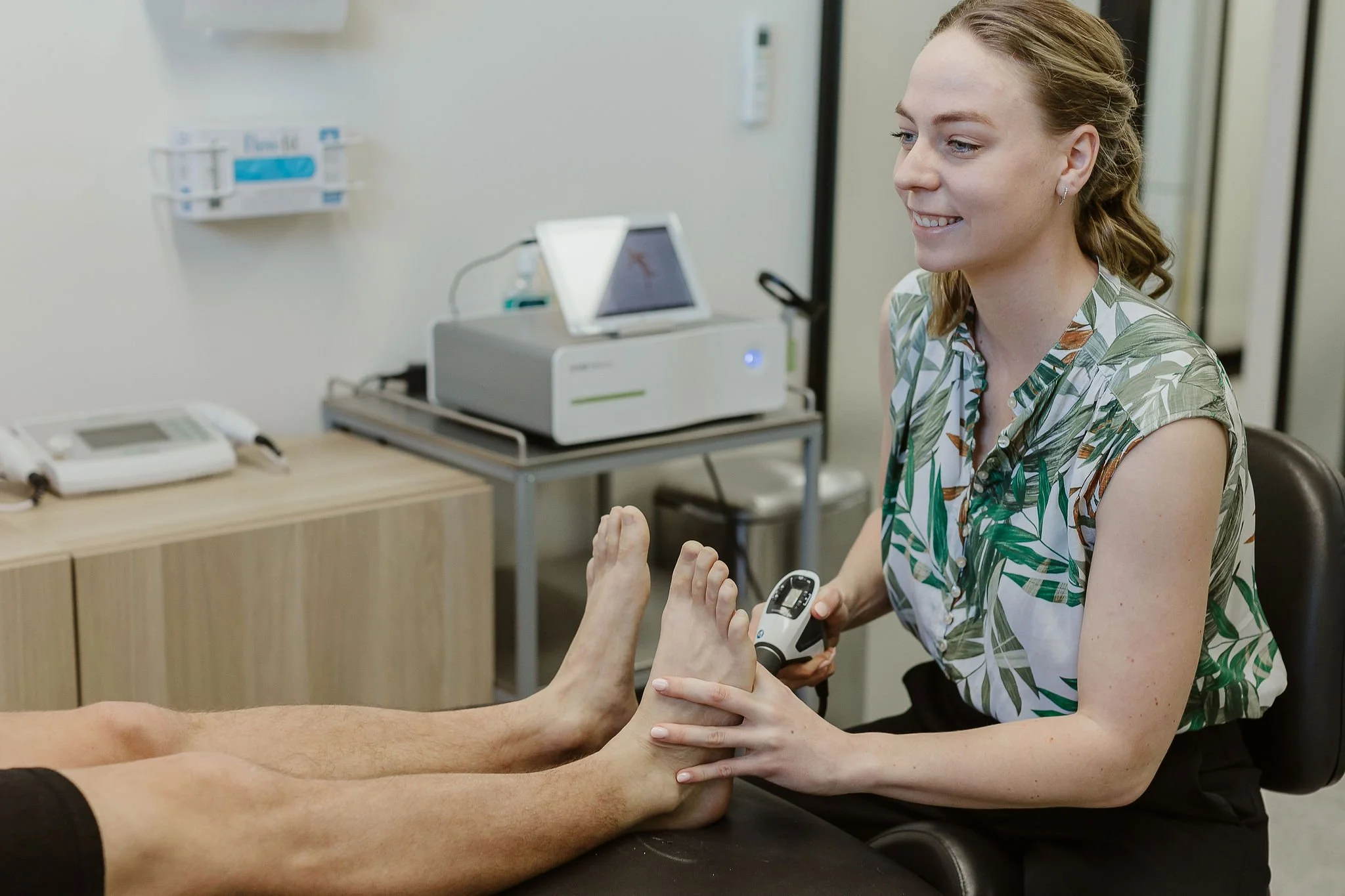
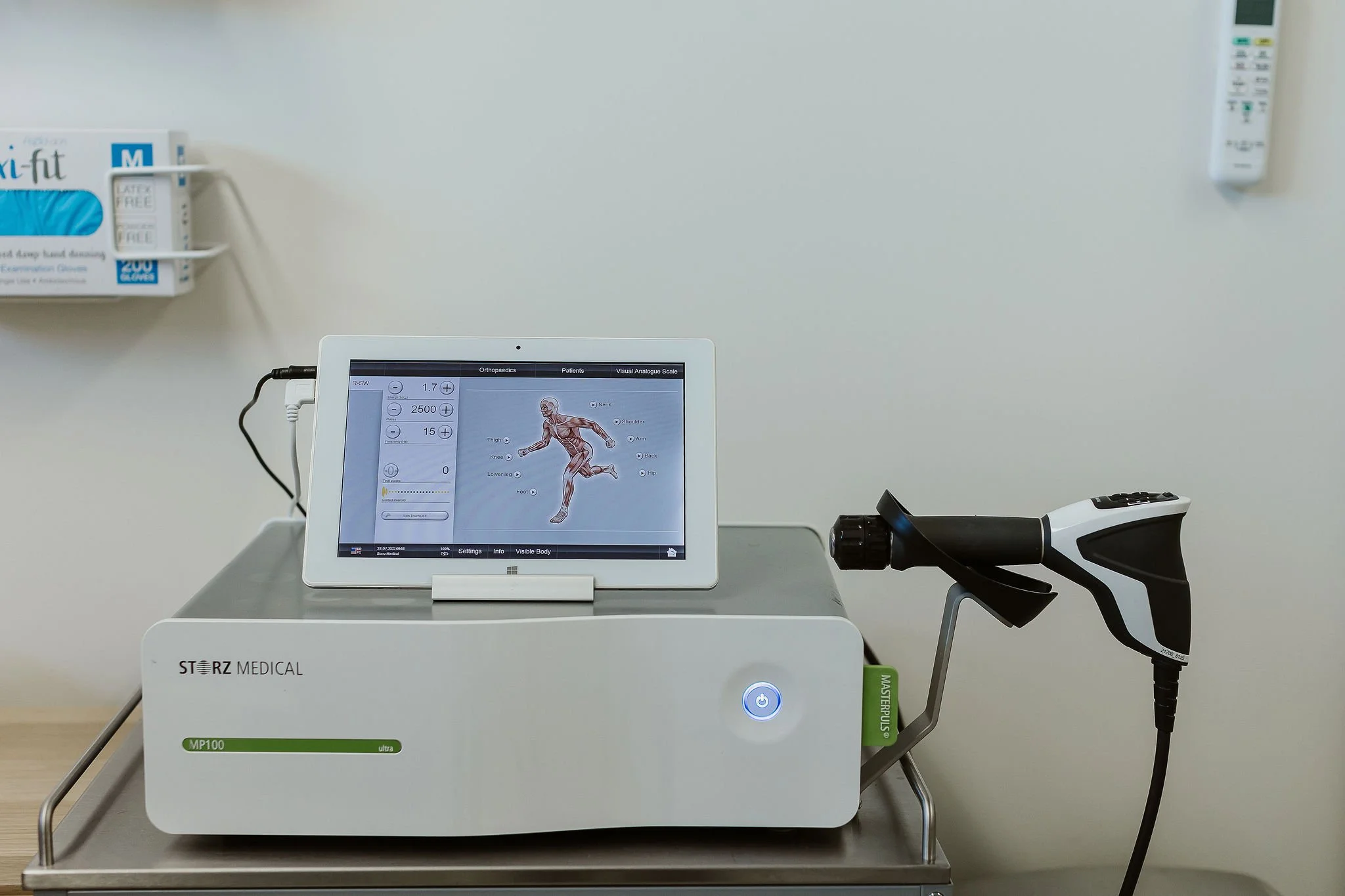
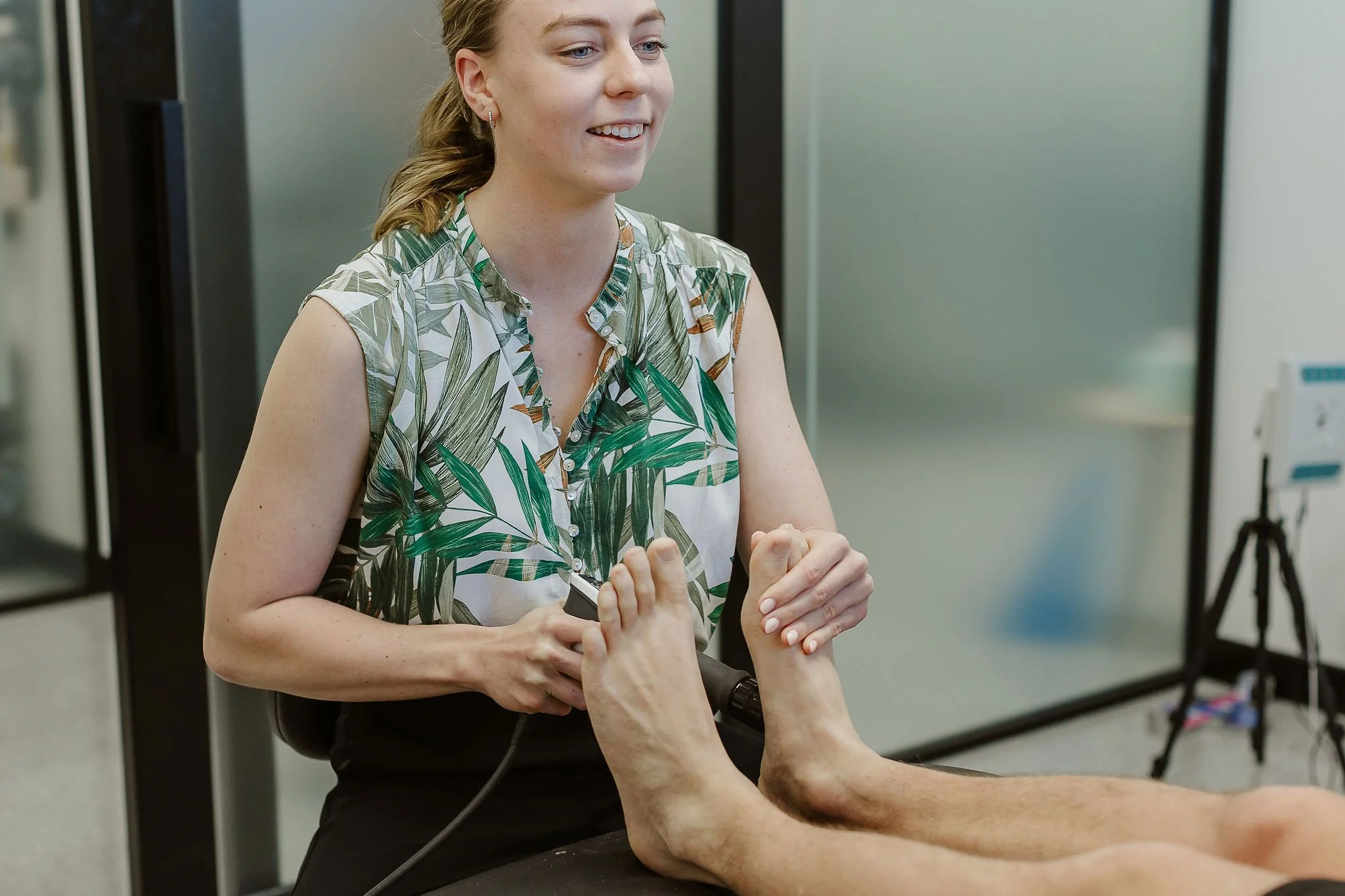
Extracorporeal shockwave therapy (ESWT) uses acoustic (sound) waves delivered through a handheld device placed against the skin. It's non-invasive, no needles, no incisions.
It's designed to stimulate the body's own healing response in tendons and soft tissue that have become thickened or slow to repair. It's generally used after simpler measures haven't given enough relief on their own.
Why It’s Used for These Conditions
Both conditions involve overloaded connective tissue that hasn't had the chance to remodel.
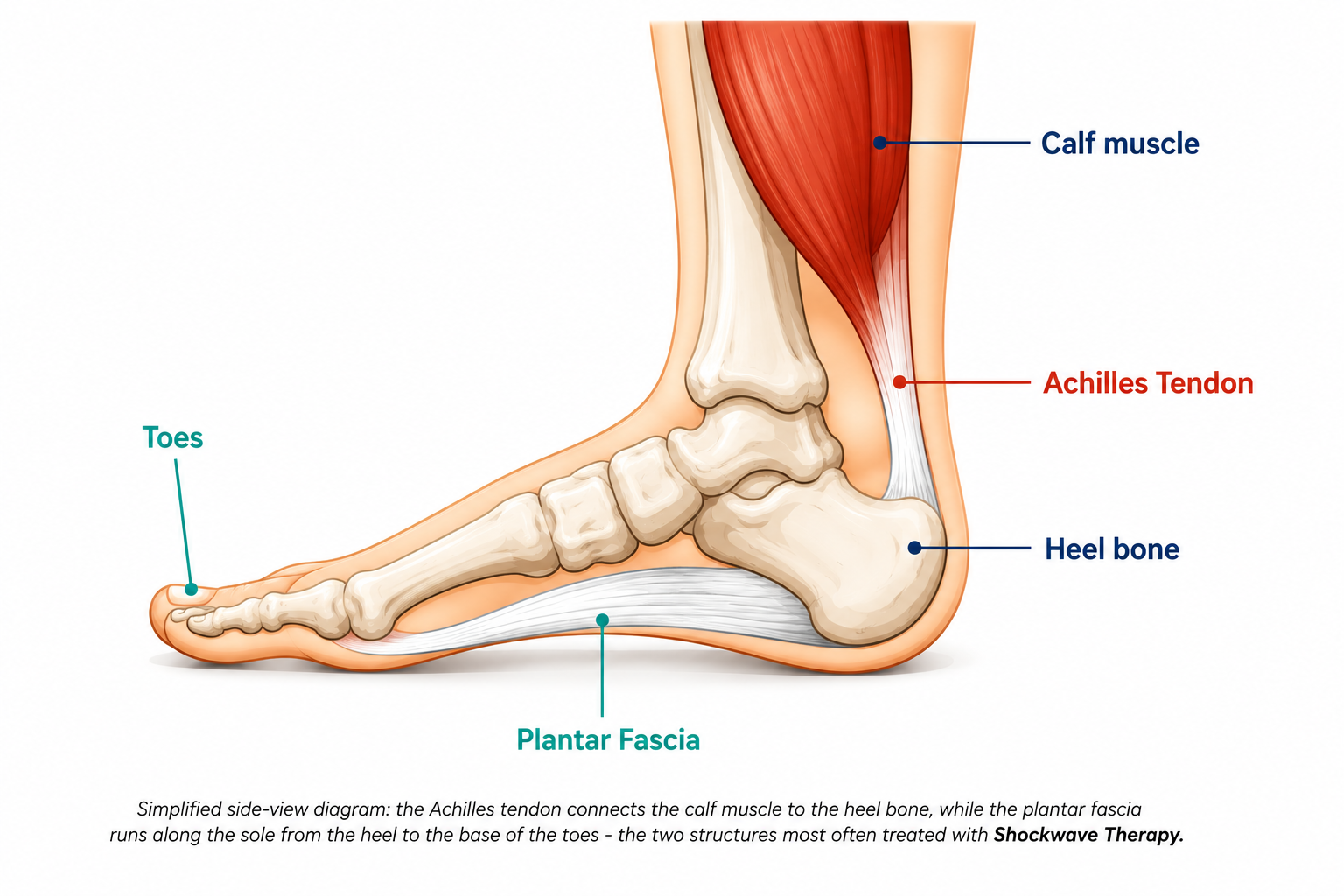
Achilles tendinopathy affects the tendon connecting the calf to the heel bone, common in runners and after a jump in training load. Plantar fasciitis affects the band of tissue along the sole of the foot, often causing sharp pain with the first steps in the morning.
Shockwave is one option clinicians consider for either, usually alongside footwear review, activity adjustments, and sometimes custom orthotics.
When Should I See a Podiatrist?
Book an assessment if you notice:
Heel or arch pain that's worse with your first steps in the morning
Achilles pain that doesn't ease after a few days of reduced activity
Pain lasting more than two to three weeks
Swelling or a noticeable lump
Symptoms that keep returning when you try to get back to sport
Heel and Achilles pain can have more than one underlying cause, so an accurate diagnosis matters before starting treatment. See our plantar fasciitis differential diagnosis article for more.
Treatment Options
Where Shockwave Fits In
Shockwave is rarely used alone. A typical plan can include:
Load and activity management — adjusting training volume, surfaces, or footwear while the tissue recovers.
Stretching and strengthening — structured exercises that usually continue well beyond the shockwave sessions themselves.
Footwear and orthotic support — custom orthotics or footwear changes to help redistribute pressure.
Shockwave sessions — typically delivered weekly over several weeks to help stimulate the tissue's healing response.
Many patients find this combined approach helpful, though results vary and it isn't the right fit for everyone. Persistent cases may warrant a broader MSK and sports podiatry review.
What Happens During a Session?
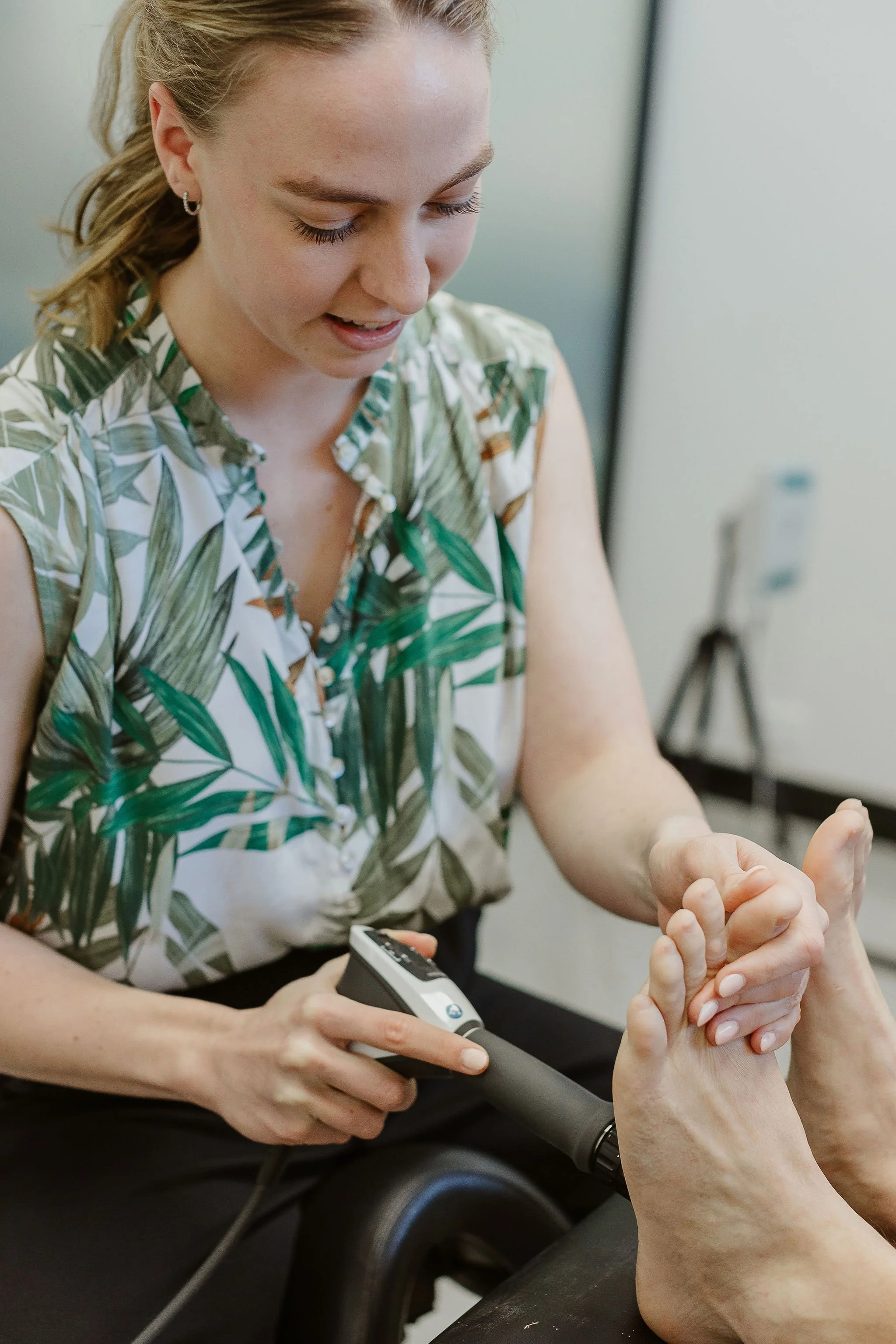
Your podiatrist assesses your foot first to confirm shockwave is appropriate. You'll be seated while a conductive gel is applied, then the handheld applicator delivers pulses to the area over several minutes.
Most people describe pressure or mild discomfort rather than pain. Intensity is adjusted to what you can tolerate. There's no downtime; some mild soreness for a day or two is normal, similar to post-exercise muscle ache.
Treatment is usually delivered as a series of weekly sessions, with your podiatrist monitoring your response as you go.
Frequently Asked Questions
Is shockwave therapy painful?
Most patients describe it as uncomfortable rather than painful. Intensity is adjusted throughout, and any soreness afterward is usually mild and short-lived.
How many sessions will I need?
This depends on your presentation and how your tissue responds, your podiatrist will outline an expected course at assessment and review progress as you go.
Will shockwave therapy definitely fix my pain?
No treatment can promise a guaranteed outcome. It's one option many patients find helpful as part of a broader plan, but results vary. Your podiatrist can talk you through what's realistic for your situation.
Ready to get your heel or Achilles pain properly assessed?
Book an appointment with the JS Podiatry team and we’ll talk you through whether shockwave therapy or another approach is the right next step for you.